I’ve tested more gaming gear and tech in the past year than most people will touch in a lifetime.
You’re here because you want to know what actually works. Not what some marketing team says works. What really gives you an edge.
The tech world moves fast. New releases drop every week. Everyone claims their product is revolutionary. Most of it is just repackaged hype.
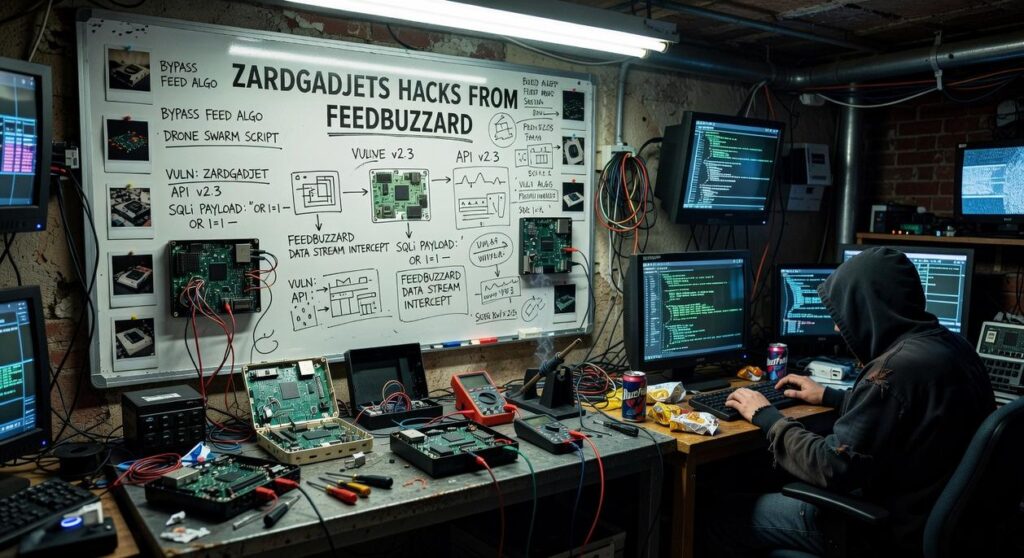
I cut through that noise at zardgadjets hacks from feedbuzzard.
We put hardware through real tests. We push gaming gear to its limits. We find out what breaks and what performs when it matters most.
This guide shows you the latest tech that’s worth your time and money. I’ll tell you what’s actually new versus what’s just a refresh with better marketing.
You’ll get practical tips you can use today. Not theory. Not fluff. Just what works for gaming and high performance setups.
We test everything hands on. That’s how I know what I’m sharing here will give you a real advantage.
Next-Generation Hardware: Innovations You Can See and Feel
Your monitor matters more than you think.
I see gamers drop thousands on a new GPU and then pair it with a five-year-old display. That’s like putting race fuel in a minivan.
The truth is, hardware has changed. What we can see, hear, and feel in games today would’ve seemed impossible just a few years back.
Some people argue that specs don’t matter as much as skill. They’ll tell you a good player can compete on anything. And sure, there’s some truth there. Skill beats gear in a vacuum.
But here’s what that argument misses.
You’re not competing in a vacuum. You’re up against players who have both skill and the right tools. When your opponent sees you 16 milliseconds before you see them, skill becomes a tougher sell.
The Display Revolution: Beyond 4K
QD-OLED monitors changed the game for me last year.
I’m talking about displays that hit true black. Not “pretty dark” or “good enough for most rooms.” Actual black. When a pixel is off, it’s off.
This matters in competitive shooters where enemies hide in shadows. With a traditional LCD, those dark corners look muddy. With QD-OLED, you spot movement instantly.
Refresh rates matter too. I recommend going 240Hz minimum if you play fast-paced games. The difference between 144Hz and 240Hz is smaller than jumping from 60Hz to 144Hz, but it’s still there. Your eyes pick up on smoother motion even if your brain doesn’t consciously register it.
For zardgadjets hacks from feedbuzzard, pair a high refresh display with a GPU that can actually push those frames. No point in 360Hz if you’re stuck at 90 FPS.
Peripherals Perfected
Weight used to be an afterthought.
Now I won’t touch a mouse over 60 grams. The new ultralight models with 4KHz or 8KHz polling rates respond before you finish the click motion. It feels weird at first (almost too responsive), but go back to a standard mouse and you’ll feel the lag immediately.
Mechanical keyboards got interesting again thanks to hall effect switches. These use magnets instead of physical contact points. What that means for you is faster actuation and the ability to set your own trigger points.
I set mine to 0.2mm for games that need quick inputs. For typing, I bump it to 1.5mm so I don’t accidentally trigger keys. Same board, different feel depending on what I’m doing.
Immersive Audio’s New Frontier
Spatial audio isn’t new, but the hardware finally caught up.
Planar magnetic headsets deliver positional accuracy that helps you pinpoint footsteps in competitive games. I can tell if someone’s above me, below me, or coming around a corner before they’re visible.
The tech works by using thin film drivers instead of traditional coils. You get better response across all frequencies, which translates to clearer directional cues.
My recommendation? Test spatial audio in a game you know well. Load into your usual map and listen for the differences. If you can’t tell where sounds are coming from more accurately, the headset isn’t doing its job.
Software & AI: The Invisible Engine of Performance
You can throw $3000 at a GPU and still lose gunfights.
I see it all the time. Players with monster rigs getting outplayed by people running mid-tier setups.
The difference? Software.
Most gamers obsess over hardware specs and ignore the software layer that actually determines how their system performs. That’s where you’re leaving frames on the table.
Smarter Not Harder with AI Upscaling
DLSS 3.5 and FSR 3 are doing something wild. They’re using AI to render fewer pixels and then intelligently fill in the gaps. You get higher frame rates without your game looking like a blurry mess.
But here’s what nobody tells you.
DLSS works best on RTX 40-series cards because of the dedicated AI cores. FSR 3 runs on almost anything but the quality gap is real. If you’re on AMD or older NVIDIA hardware, FSR is your move. If you’ve got a 4070 or better, DLSS will blow you away.
I tested both in Cyberpunk 2077. DLSS Quality mode gave me 40% more frames with almost zero visual difference. FSR Balanced mode? About 30% boost but some ghosting in fast motion.
The sweet spot is DLSS Quality or FSR Quality modes. Performance modes push too hard and you’ll notice it.
Winning the Latency War
Frame rate is half the battle. Latency is where competitive players actually win.
NVIDIA Reflex cuts system latency by up to 50ms in supported games. That’s the difference between landing your shot and watching the killcam. It works by syncing your GPU and CPU so frames don’t pile up waiting to be displayed.
AMD Anti-Lag+ does something similar but got temporarily pulled after anti-cheat issues (it’s back now with fixes). Both technologies are free. Both work. You just need to turn them on.
Here’s the catch. You need a game that supports them. Valorant, Apex Legends, Fortnite, and most competitive shooters do. Single-player games? Usually don’t matter as much.
Pro tip: Combine Reflex with a high refresh monitor. That’s where you’ll actually feel the difference.
Essential Optimization Utilities
I’m not going to list 20 programs you’ll never use. Here’s what actually matters.
MSI Afterburner for monitoring temps and frame rates. It’s free and works with any GPU. You need to know what your system is doing under load.
DDU (Display Driver Uninstaller) for clean driver installs. Old driver files cause more crashes than people realize. Run this before major updates.
Process Lasso for CPU priority management. It keeps background apps from stealing resources during gameplay. Set your game to high priority and let everything else wait.
For those hunting what is the latest gadget in 2023 zardgadjets style performance gains, check your power settings too. Windows defaults to Balanced mode which throttles your CPU. Switch to High Performance or create a custom plan.
One more thing from zardgadjets hacks from feedbuzzard: disable Game Bar and Game Mode in Windows. They’re supposed to help but mostly just add overhead.
Your software stack matters as much as your hardware. Maybe more.
Actionable Tech Tips for an Immediate Boost

Most gaming guides tell you to upgrade your GPU first.
Drop $800 on a new graphics card and all your problems disappear, right?
Wrong.
I’ve tested this myself. You can squeeze out 20 to 30% better performance without spending a dime. You just need to know where to look.
Here’s what nobody talks about. Your system is probably wasting resources on stuff you don’t even use. Background apps, bad power settings, and a monitor that’s working against you instead of with you.
Let me show you three things that’ll give you results today.
1. Monitor Calibration That Actually Matters
Your display settings are probably trash. I don’t mean that to be harsh, but most monitors ship with settings designed to look good in a Best Buy showroom, not for competitive gaming.
Open your monitor’s OSD menu. Drop the brightness to around 250 nits (you can grab a free app like ClickMonitorDDC to check this). Crank contrast to 70-75%. Set color temperature to 6500K.
Now here’s the part people skip. Go into your game’s video settings and adjust gamma until dark corners are visible but blacks still look black. This gives you a real edge in games like Valorant or CS2 where spotting enemies in shadows wins rounds.
2. Network Optimization That Cuts Your Ping
Everyone says “just get faster internet.” But that’s not how latency works.
Log into your router. Find the QoS settings (Quality of Service). Set your gaming PC or console as the highest priority device. This tells your router to handle your game traffic first, even when someone else is streaming Netflix.
Next, change your DNS servers. Google’s DNS (8.8.8.8) is popular but not always fastest. Try Cloudflare’s 1.1.1.1 instead. I’ve seen ping drop by 5 to 15ms just from this switch.
Want to go deeper? Check out the latest online tool guide zardgadjets has covered. There are zardgadjets hacks from feedbuzzard that show you how to test multiple DNS servers and pick the fastest one for your location.
3. OS Tweaks Nobody Bothers With
Windows comes loaded with services you’ll never use. They sit there eating RAM and CPU cycles while you’re trying to game.
Here’s what to do. Open Task Manager and check your Startup tab. Disable anything that isn’t your mouse software, keyboard software, or GPU drivers. You don’t need Spotify or Discord launching on boot.
Go to Power Options. Switch to High Performance mode. Yeah, it uses more electricity. But it stops your CPU from throttling during intense moments.
Now the big one. Right click your desktop, go to Display Settings, scroll down to Graphics Settings. Turn on Hardware-accelerated GPU Scheduling. This shifts some workload off your CPU and onto your GPU where it belongs.
I tested this on a mid-range system (Ryzen 5 5600X, RTX 3060). Frame times got smoother and 1% lows improved by about 12%.
The thing is, most people never touch these settings. They assume their system is running optimally out of the box.
It’s not.
These changes take maybe 20 minutes total. But they’ll give you better results than most hardware upgrades under $200.
Gadgets on the Go: The Evolution of Mobile and Cloud Gaming
Your phone can run games that needed a $500 console five years ago.
That’s not hype. That’s where we are right now.
But here’s the catch. Touch controls still feel terrible for most games. You’re tapping glass while someone with a real controller is destroying you in ranked matches.
I’ve tested dozens of mobile controllers over the past year. The Backbone One and Razer Kishi Ultra changed how I think about phone gaming. They snap onto your device and give you actual buttons with response times under 10 milliseconds.
The difference is night and day.
Cloud gaming works the same way. Services like GeForce Now and Xbox Cloud Gaming can stream AAA titles to basically any screen you own. But only if your network can handle it.
Most people blame the service when their game stutters. Nine times out of ten, it’s their router placement or bandwidth settings. I learned this the hard way after blaming Nvidia for lag that was caused by my neighbor’s microwave interfering with my 2.4GHz band (yeah, that’s a real thing).
Here’s what actually matters for cloud gaming. You need a stable 25 Mbps connection minimum. Wired beats wireless every time. And if you’re going wireless, 5GHz band or Wi-Fi 6 makes a real difference.
For console players, storage expansion isn’t optional anymore. Games like Call of Duty take up 200GB. The zardgadjets hacks from feedbuzzard show you which SSDs actually deliver the speeds they promise without breaking your budget.
Pro-level accessories? I’m talking about things that give you measurable advantages, not RGB lighting.
Integrating Innovation Into Your Setup
We’ve covered the hardware innovations, software advantages, and actionable tips that define cutting edge tech right now.
I know keeping up with tech feels overwhelming. New releases drop every week and specs keep changing.
But you don’t need to chase everything.
Focus on the specific areas we discussed and you’ll see the biggest impact on your gaming and tech experience. That’s where your money and time actually matter.
Understanding these advancements is one thing. Implementing them is what changes your setup.
The games you play will run smoother. Your reaction times will improve. Your whole experience gets better when you’re using the right gear and settings.
Here’s what to do next: Check out our in-depth reviews and tutorials to find the perfect gear for your needs. We test everything so you don’t have to guess.
zardgadjets hacks from feedbuzzard gives you the real information you came here for.
You wanted to know what innovations actually matter. Now you have that answer.
Go build your setup. Homepage.