
Gaming isn’t what it used to be—and that’s exactly why so many players are searching for answers about where it’s headed next. If you’re trying to understand the live service games evolution, how it impacts competitive play, and which gear and strategies actually give you an edge, this article is built for you.
Today’s biggest titles aren’t just launched and left alone—they’re constantly updated, rebalanced, and expanded. That shift changes everything: how you train, how you invest in gaming gear, and how you compete in eSports environments that evolve month after month. Missing these shifts can mean falling behind.
In this guide, we break down the mechanics behind modern live updates, meta shifts, monetization models, and gadget-driven performance upgrades. Our insights are grounded in hands-on game analysis, performance testing of popular gear, and close tracking of competitive trends across major titles.
By the end, you’ll have a clear understanding of what’s changing, why it matters, and how to adapt your strategy to stay ahead.
The Shift to “Games as a Service”: Why Your Favorite Game Never Ends
As live service games continue to innovate and foster communities through regular updates and interactive content, they are transforming player engagement in ways that even titles like Mopfell78 on PC are beginning to explore – for more details, check out our Mopfell78 Version Pc.
Once upon a time, you bought a game, beat it, and traded it in at GameStop (RIP to your $4 credit). Then broadband improved, digital storefronts exploded, and publishers realized something: recurring revenue beats one-and-done sales. Thus began the live service games evolution.
From Expansion Packs to Seasonal Passes
Expansion packs in the early 2000s—think World of Warcraft: The Burning Crusade—proved players would pay for more content. But microtransactions and battle passes changed the math. A SEASONAL MODEL spreads revenue across the year instead of launch week. Economically, it stabilizes cash flow; technologically, cloud servers and constant patching make it possible (no more shipping discs).
Some argue this model nickel-and-dimes players. That’s fair. Cosmetic skins and $10 passes add up. Yet supporters counter that steady income funds ongoing updates, esports tournaments, and massive live events—like Fortnite’s Travis Scott concert, which felt more Coachella than controller.
The Player Retention Engine
Developers rely on:
- Daily quests
- Limited-time events
- Tiered battle passes
These systems drive ENGAGEMENT LOOPS—cycles that reward consistent play. Critics call it manipulative design rooted in FOMO (fear of missing out). But others see it as evolving entertainment, closer to Netflix drops than static cartridges.
Case Study: Fortnite
Since 2017, Fortnite has averaged major updates every few weeks, with seasonal overhauls quarterly. Epic’s cadence keeps Twitch viewership high and players returning. Revenue reportedly surpassed $9 billion in its first two years (Epic Games court filings, 2021).
The Psychology of the Forever Game
FOMO is real (just ask anyone who missed a limited skin). But so is the joy of a world that never feels finished—like the Marvel Cinematic Universe, always teasing the next phase. The game doesn’t end. It just reloads.
Anatomy of an Update: Deconstructing Modern Game Patches
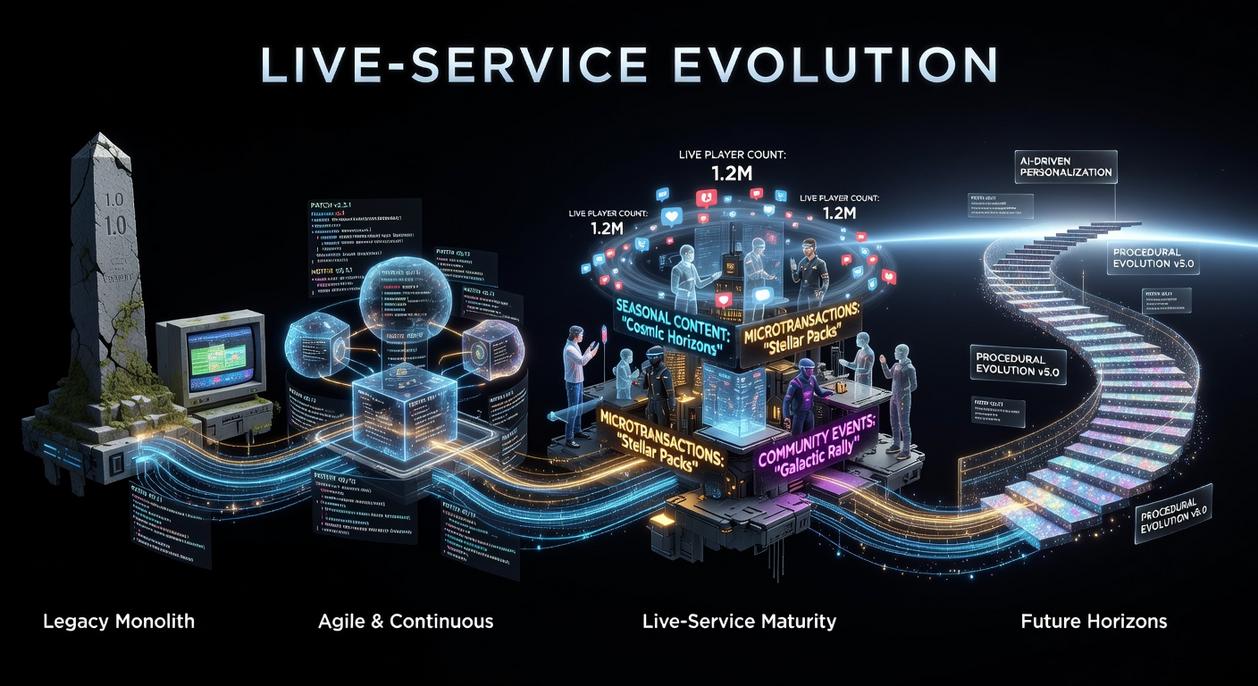
Modern game patches aren’t just bug fixes—they’re strategic moves that shape how (and why) you play. Understanding their anatomy gives you a competitive edge and helps you anticipate what’s coming next.
Balance Patches vs. Content Drops
A balance patch focuses on gameplay tweaks—nerfs (reductions in power) and buffs (increases in power). If a character dominates ranked matches, developers may lower damage output or cooldown speed. The benefit? A fairer meta and more viable strategies (no more facing the same overpowered build every match).
By contrast, content drops introduce new maps, characters, story arcs, or modes. Think seasonal expansions in titles like Fortnite or Apex Legends. These updates keep communities engaged, spark fresh strategies, and often revive lapsed players. For you, that means renewed excitement—and new ways to climb competitive ladders.
The Role of a Public Test Realm (PTR)
A Public Test Realm (PTR) is a pre-release server where players test updates before global rollout. Developers gather feedback, fix exploits, and rebalance mechanics. While some argue PTR leaks spoil surprises, the upside is huge: fewer catastrophic launches and smoother day-one gameplay. You get a more polished experience without acting as an unpaid bug tester.
The Technical Challenge
Deploying updates to millions is complex. Servers must sync assets, prevent data corruption, and minimize downtime. Even minor code conflicts can trigger crashes. Seamless rollouts protect ranked progress and in-game purchases—saving you time and frustration.
Monetization Through Evolution
Battle passes, cosmetic shops, and DLC fuel live service games evolution. Some criticize this as aggressive monetization. Yet when done right, it funds continuous development and free content updates. For players, that means steady improvements aligned with broader top gaming industry trends shaping competitive play in 2026. Pro tip: invest in passes only if you regularly complete seasonal challenges to maximize value.
Gear Check: How Hardware Adapts to Constantly Shifting Metas
The Arms Race for Performance
Competitive titles no longer stand still. With every patch, graphical overhauls, physics tweaks, and AI refinements quietly raise system demands. In the era of live service games evolution, yesterday’s “ultra settings” rig can become today’s stutter machine. While some argue skill outweighs specs, frame drops during a team fight tell a different story. Higher clock speeds and modern GPUs don’t just look better—they reduce input delay and stabilize frame pacing (critical in esports where milliseconds matter).
Peripherals on the Front Line
A new recoil pattern or mobility ability can redefine ideal mouse sensitivity and keybind logic. When a hero gains vertical movement, players often lower DPI for tracking precision. When audio cues become central to gameplay, headset EQ profiles must shift toward footstep frequencies (typically 2–4 kHz, per audio engineering standards).
• Re-test mouse DPI after recoil changes
• Re-map abilities to reduce finger travel time
• Adjust headset EQ for positional clarity
Gadget-Driven Advantage
High-refresh-rate monitors (240Hz+), programmable mice, and low-latency DACs create measurable edges competitors rarely quantify. Pro tip: after any major balance patch, record gameplay, check frame-time consistency, recalibrate sensitivity, and benchmark again. Hardware isn’t vanity—it’s adaptability engineered.
The 24-Hour Scramble
When a patch drops, the clock starts. In my view, the first 24 hours decide who climbs and who complains. Pros dissect patch notes line by line, hunting buffs, nerfs, and hidden interactions (yes, the fine print matters). Some argue it’s overkill—just play and adapt naturally. I disagree. In live service games evolution rewards preparation, not vibes.
Adapt or Perish
Old mains get benched. Stubborn strategies crumble. Flexibility wins championships.
Resourcefulness
Meanwhile, data sites, pro streams, and theorycraft forums surface patterns fast. Pro tip: track win-rate spikes early before they normalize. Speed beats comfort every single time.
Level Up Your Strategy in the Era of live service games evolution
You came here to understand how modern games keep evolving long after launch—and now you see the bigger picture. From seasonal content and battle passes to constant balance updates and community-driven patches, live service games evolution has reshaped how players compete, progress, and stay ahead.
The real challenge isn’t just keeping up—it’s staying competitive while the meta shifts under your feet. Falling behind on updates, gear optimization, or new strategies can cost you ranks, rewards, and relevance.
So here’s your next move: stay informed, upgrade your setup strategically, and apply pro-level tactics consistently. Explore in-depth gear breakdowns, meta analyses, and eSports-backed strategies to sharpen your edge. Thousands of competitive players rely on expert-tested insights and top-rated gear recommendations to dominate every season.
Don’t let the next patch catch you off guard. Dive into the latest guides, optimize your loadout, and start winning smarter today.
 A key contributor to the foundation of Zard Gadgets, Ronaldo Floresierna played a vital role in shaping the platform's technical and strategic edge. His expertise in eSports dynamics and gadget-driven enhancements helped bridge the gap between high-level gear and practical player performance. By focusing on professional-grade tutorials and hardware reliability, Floresierna ensured the project became a trusted resource for gamers seeking to optimize their competitive mastery.